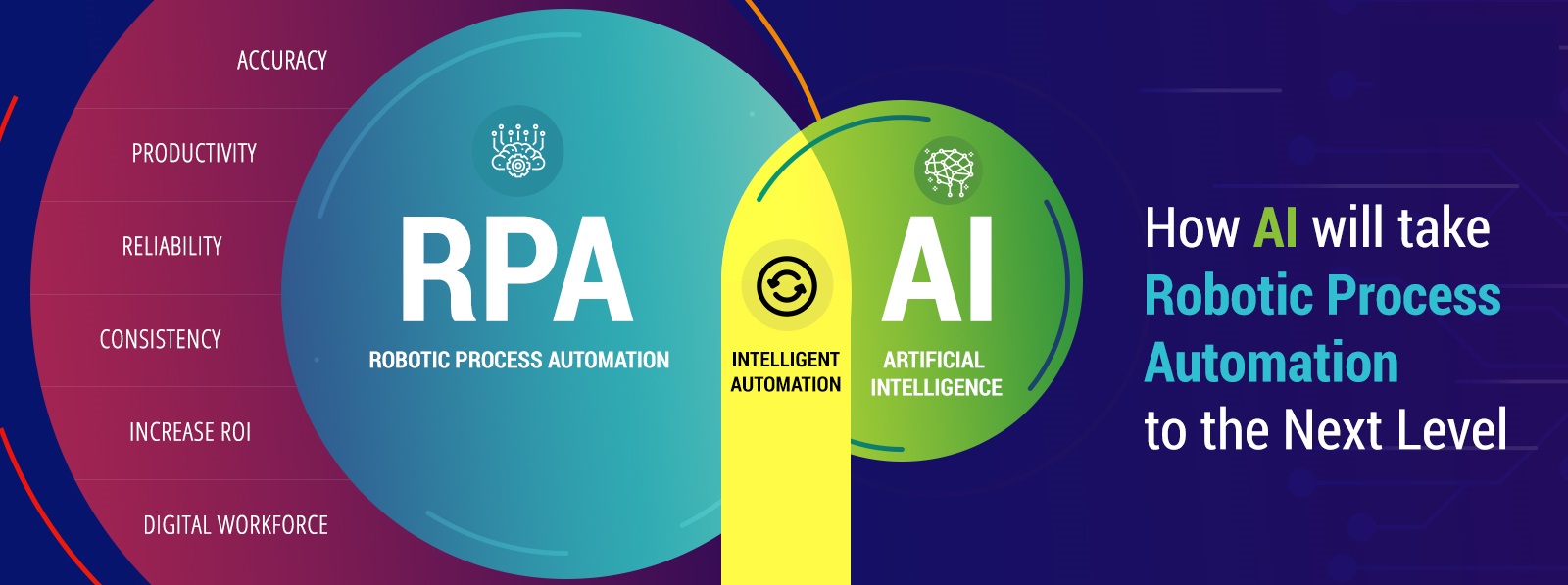
RPA is an exciting new technology that is being seen as the first step to using new and advancing technologies to automate enterprise processes. We will learn how RPA brings a level of advancement to automation that is much more evolved than the earlier automation process through its use of scripts, macros, and so on.
RPA is advancing rapidly and is part of a bigger movement to low code and no-code tools. Compared to traditional coding, these tools are easier to use and faster to deploy. Organizations are now using these rapid development tools with emerging technologies such as process mining, artificial intelligence (AI), and analytics to enable end-to-end process automation.
Module 1, Understanding Essential Artificial Intelligence Basics for RPA Developers, will cover the key AI concepts that are relevant in your daily work as an RPA developer and BPMN.
Module 2, Bridging the Gap between RPA and Cognitive Automation, will explore in detail the benefits of adding cognitive automation to your Robotic Process Automation (RPA) toolkit.
Module 3, Understanding the RPA Platform in the Cognitive Automation Life Cycle, will explore the UiPath platform to appreciate how using this platform can help you accelerate and amplify cognitive automation.
Module 4, Identifying Cognitive Opportunities, will focus on how to search for cognitive opportunities, and qualify automation opportunities, to ensure the opportunity is fit for cognitive automation.
Module 5, Designing Automation with End User Considerations, will focus on how to gather user goals and requirements, and learn how to incorporate these goals into the design of future state automation.
Module 6, Understanding Your Tools, will review the activities of Document Understanding, AI Center, and Computer Vision, while reviewing the Document Understanding framework and learning about the out-of-the-box models available with AI Center.
Module 7, Testing and Refining Development Efforts, will review how to prepare test data and test cases, and also how to train and increase model accuracy by closing the feedback loop with human validation and RPA built-in validation features.
Module 8, Use Case 1 – Receipt Processing with Document Understanding, will demonstrate how to build cognitive automation that can interpret the images of receipts using RPA Document Understanding.
Module 9, Use Case 2 – Email Classification with AI Center, will demonstrate how to build cognitive automation that can classify the text of emails using RPA AI Center.
Course Overview
Duration: 16 Hours
Artificial intelligence (AI) and RPA enables enterprises to optimize business processes that require cognitive abilities, are probabilistic, and have high variability and unstructured data in terms of documents, images, and voice. RPA developers and tech-savvy business users do not have a high barrier to using AI to solve everyday business problems. This practical training to AI with RPA will help AI engineers and RPA developers working with business process optimization to put their knowledge to work. The course takes a hands-on approach to implementing automation in business use cases in no time.
Complete with step-by-step explanations of essential concepts, practical examples, and self-assessment questions, this book begins by helping you understand the power of AI and gives you an overview of leveraging relevant out-of-the-box models. You’ll learn about cognitive AI in the context of RPA, the basics of machine learning, and how to apply cognitive automation within the development life cycle. You’ll then put your skills to the test by building three use cases examples. To be able to build RPA automation with the cognitive capabilities of Document Understanding and AI Center while understanding the development life cycle.
 .
.